Leopard, also known as leopard, leopard and leopard tiger, is an animal of the genus leopard of the Felidae family, with the smallest size among the four large cats. Leopard has bright color, many spots and golden fur, so it is also known as leopard or leopard. Leopard can be said to be an agile hunter, vigorous, flexible, fast running, average speed of about 65 km / h.
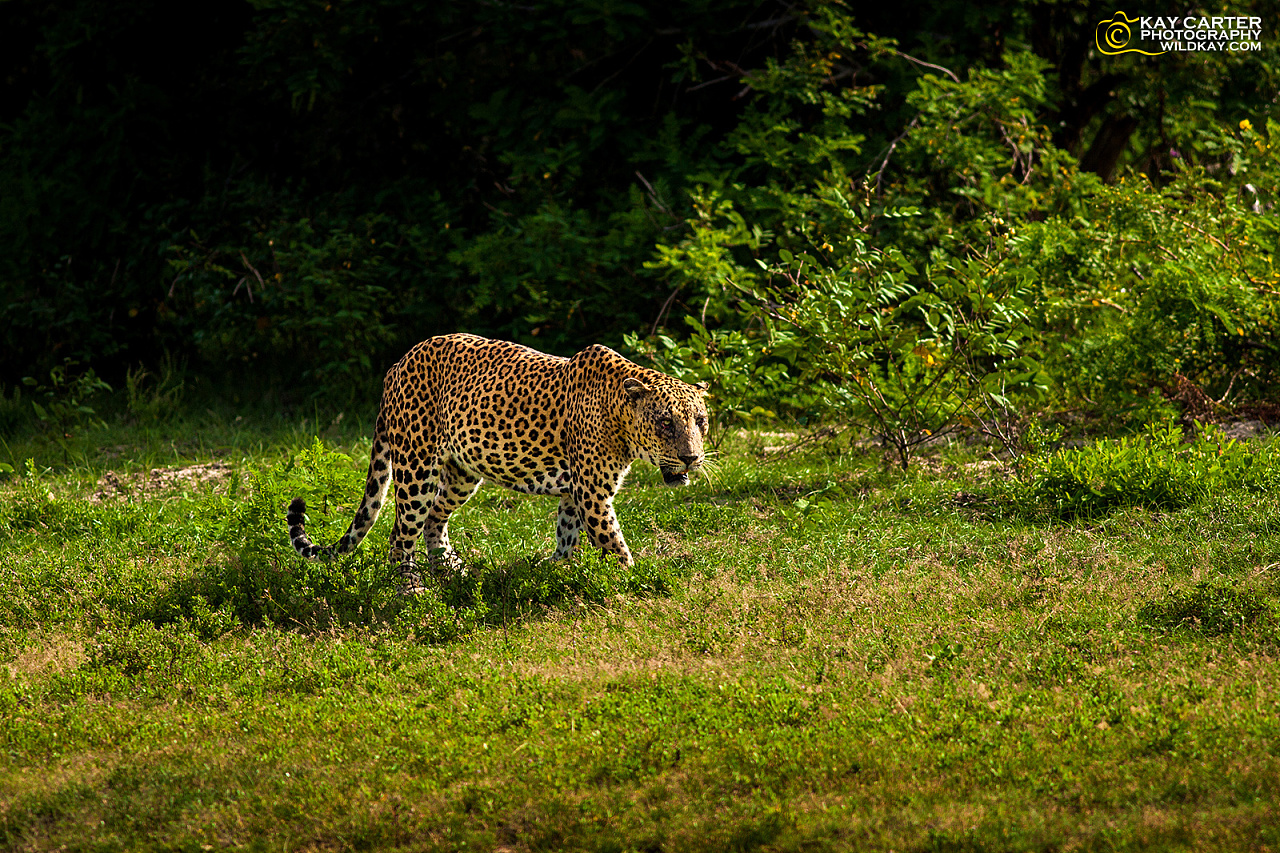
Leopard is an animal of the genus Panthera of the Felidae family, which is the smallest among the four large cats. Leopard has bright color, many spots and golden fur, so it is also known as leopard or leopard. Leopard can be said to be an agile hunter, with strong body, flexible movement and fast running speed.
Leopards are widely produced in China, Asia and America. Therefore, there are Chinese leopards, Asian leopards and leopards. They are also widely produced in Africa, so there are African leopards. However, there are no leopards in Europe, nor in Australia (home to marsupials). There are three subspecies in China: p.pardus fusea, p.p.fontanieri and p.p.orientalis.
The Chinese leopard has been present since the middle Oligocene, which indicates that this animal has lived for at least 500000 years. The leopard is also widely known as the leopard.
Domestic distribution
In China, there are at least three subspecies of Leopard: p.pardus fusea, p.p.fontanieri and p.p.orientalis. There may be Indosinian leopards in Xishuangbanna, Yunnan. It is necessary to point out that the so-called "South China leopard" in the past does not exist. The scientific name of South China leopard, P. pardus fusea, is actually the same as that of cheetah. Cheetahs may only be found in Tibet (chinazone 2009). However, in Guangdong, Jiangxi, Hunan, Fujian and other South China regions, leopards may be Chinese leopards (p.p.fontanieri).
Except for a few provinces, such as Taiwan, Hainan and Xinjiang, leopards have been found in all provinces in China. The North China subspecies are found in Hebei, Shanxi and Northern Shaanxi; the Northeast subspecies have been found in the DA and Xiao Xing'an Mountains of Heilongjiang Province and the eastern mountainous areas of Jilin Province, and extend eastward to the coastal areas of Russia and North Korea. This subspecies is already the rarest leopard subspecies in the world.
Distribution abroad
It is mainly distributed in Asia, Africa and Arabian Peninsula. The leopard is tall, graceful, powerful and agile. It is a symbol of dignity and strength.
The leopard's head is small and round, with short ears, black back, yellow ear tip and yellow base, with sparse black spots. The iris is yellow. Under strong light, the pupil shrinks to a round shape, and glows with phosphorescence at night. Canine teeth developed, the surface of the tongue with many horny inverted spines. There are 5 rows of oblique whiskers on each side of the mouth. The forehead, between the eyes and below, and the cheek are covered with small black spots. The hair color of the body is bright. The back of the body is apricot yellow. The lower part of the neck, chest, abdomen and inner side of the limbs are white. The back of the ear is black. There is a significant white spot. The tail tip is black. The whole body is covered with black spots. The spots on the head are small and dense, and the spots on the back are dense and large. The spots are round or oval plum shaped patterns, which are quite similar to ancient copper coins. Therefore, it is also called "leopard" 。 Every leopard in the world has its own unique pattern of spots, just like people's fingerprints are different.
Leopards are the world's fourth largest feline, after tigers, lions and leopards (leopards are stronger than leopards and are the third largest cats in the United States). Leopards are distributed in Asia and Africa. These animals can be seen in dense and humid forests, and can also live in deserts, savannahs and mountains.
The colors and stripes of leopards vary according to their habitats. In the open grassland, leopards have a light yellow background, while in the forest, leopards have darker colors and more stripes. The fur is covered with black rosette patterns and round or oval black spots.
Leopard is an excellent climber. In order to protect food from being eaten by other animals, leopard will drag food to high trees. Leopards often leave their prey in trees for days and come back to eat when they are hungry. Leopards are very resilient and can jump six meters horizontally - the length of three adults from head to foot. They are also excellent swimmers who can catch fish and crabs in the water. Most of them live at night and hunt at night. These big cats have different diets and enjoy different kinds of food. They eat insects, fish, antelopes, monkeys, rodents, deer The variety is quite rich!
Adult leopards are solitary animals. Each adult leopard has its own territory, and although they often share some territory, they try to avoid each other. It's only during mating that females and males meet. When the female leopard is ready to mate, it will emit an odor and rub her body in the tree to leave her smell there. The male can either smell the female or hear the female's cry, knowing that she is ready to mate. A mother leopard gives birth at any time of the year, usually giving birth to two or three cubs. Females stay with their cubs until they are about two years old, hunting and taking care of themselves.
African Leopard -- the most abundant subspecies of leopard
African Leopard, native to the African continent, widely distributed in sub Saharan Africa. It's rare in most parts of West Africa today. In North Africa, a small part of Morocco remains, which may have been extinct in Egypt.
Fur color from light yellow to yellow brown, dark gold, the body is also black rose knot pattern, head, abdomen and lower limbs patterns are solid black spots. The average weight of the adult male is 60 kg, and that of the female is 35-40 kg, and the body length is about 1.3-1.7 M.
According to statistics, there are about 23664 leopards in the wild. They are listed as endangered species by the World Conservation Union.
Cheetah, the second largest subspecies of leopard
Cheetahs are widely distributed in the Indian subcontinent, mainly in various parts of India, as well as Nepal, Bhutan, Bangladesh and parts of Pakistan.
Cheetahs have fur ranging from tawny to reddish brown, or even grayish brown, depending on where they live. Male cheetahs are 1.27-1.42 meters long and weigh 50-77 kg. The female is smaller, with a body length of 1.04-1.17 meters and a weight of 29-34 kg.
As of 2015, the number of cheetahs is estimated to be between 12000 and 14000. Cheetah is listed as endangered species by IUCN.
The conflict between cheetahs and humans is particularly noteworthy
Suppose you're in India, it's midnight. Suddenly, a huge cheetah jumps out of the forest, grabs a man and drags him away. It sounds like a movie, but it happens all the time! In India, hundreds of people are killed by cheetahs every year.
Due to the expansion of agricultural land and the invasion of human and livestock in India, habitat loss and wild prey decrease. Therefore, if leopards live on the outskirts of human settlements, they will be close to human settlements, where they will be tempted to prey on animals such as dogs, pigs and goats, which become an important part of the leopard's diet.
Conflicts between humans and leopards have followed, and have increased in recent years. In retaliation for attacks on livestock, leopards are shot, poisoned or trapped in traps. The villagers think leopards are unwelcome invaders.
To this day, the conflict between humans and leopards is still a major obstacle to the protection of leopards.
Panthera farfara, the least abundant subspecies of leopard
Amur leopard (also known as Amur Leopard) is distributed in the Far East of Russia, Jilin and Heilongjiang provinces of China and parts of Northern Korea.
What distinguishes the Panther from other subspecies is that it has a thick coat, which is used to keep out the cold. Their fur is quite soft and long and dense. The length of hair on the back is 20-25 mm in summer and 70 mm in winter. The coat varies in color from yellow to light red. In summer, the fur is more colorful and the patterns are more colorful. Male body weight 32.2-48 kg, female weight in 25-42.5 kg, body length 1.07-1.36 meters.
The Panther has long limbs and is very suitable for walking in deep snow. The Far East leopard is the rarest and most endangered subspecies of leopard. At present, the number of known wild leopard is less than 30.
Leopard of North China -- a subspecies of leopard endemic to China but not found in other regions
The North China leopard is a subspecies of leopard found in northern China. This subspecies is a Chinese specialty, so it is also called Chinese leopard. In Gansu, Henan, Ningxia and Beijing, there are a few leopards living in Hebei and Shaanxi, and there are more in Shanxi.
The body shape of the North China leopard is similar to that of the Far East leopard, but its fur is dark, almost orange, and the rosette color is deeper, smaller and closer. In the wild, the average adult male weighs 50 kg and the female weighs 32 kg. The number of leopard in Shanxi Province is about 1000, which is an endangered species and is listed as the first-class protected animal in China.
Panthera pardus kotiya
Sri Lanka leopard is a subspecies of leopard distributed in Sri Lanka.
The fur of Sri Lanka leopard is yellowish brown or rusty yellow, with black spots and tight rosette pattern smaller than that of cheetah. The adult female weighs about 29 kg and the body length is about 1.04 m; the male weighs about 56 kg and the body length is about 1.27 M. It is listed as an endangered species by the World Conservation Union. As of 2015, the wild population is roughly estimated to be 700-950.
Javanese Leopard
The Javanese leopard is endemic to Java island, Indonesia. Javanese leopard fur is brown yellow, black spots on the head is relatively small. Javanese leopards weigh 50-70 kg and are 1-1.6 m long. The Javanese leopard is an extremely endangered species, and its population is declining. Within its range, only about 250 Javanese leopards live in protected habitats.
Indochina Leopard
Indochina leopards live in the dense tropical rainforests of Indochina Peninsula and southern China. It is considered extinct in Singapore, Vietnam and Laos, and almost extinct in Cambodia and southern China. The final populations come from Myanmar, Thailand and Malaysia, but the distribution is still very scattered.
The background color of Indo China leopard is almost rust red, but the color on both sides is lighter. The rosette pattern is small, closely arranged and looks very dark. The individual weight is about 50 kg. The International Union for conservation of nature (IUCN) listed the Indochina leopard as an endangered species. Up to 2016, there were about 973-2503 adult individuals.
In addition to habitat loss and fragmentation, as well as human persecution due to the conflict between humans and animals, the number of leopards is decreasing. Some people believe that leopard bones and whiskers can cure patients. Every year, many leopards are hunted for their fur and body parts, which is one of the reasons why leopards become endangered animals.