Living water body and water quality requirements of crayfish
According to the survey, no matter lakes, rivers, ponds, canals and paddy fields, the shrimp can survive, even in some water bodies where fish are difficult to survive. Lobster has a strong ability to adapt to dissolved oxygen in water. It can not only climb to the shore in the anoxic environment, but also lie on the side of the water with the help of floating plants or aquatic plants in the water, and use the gill breath on one side of the body to maintain survival.
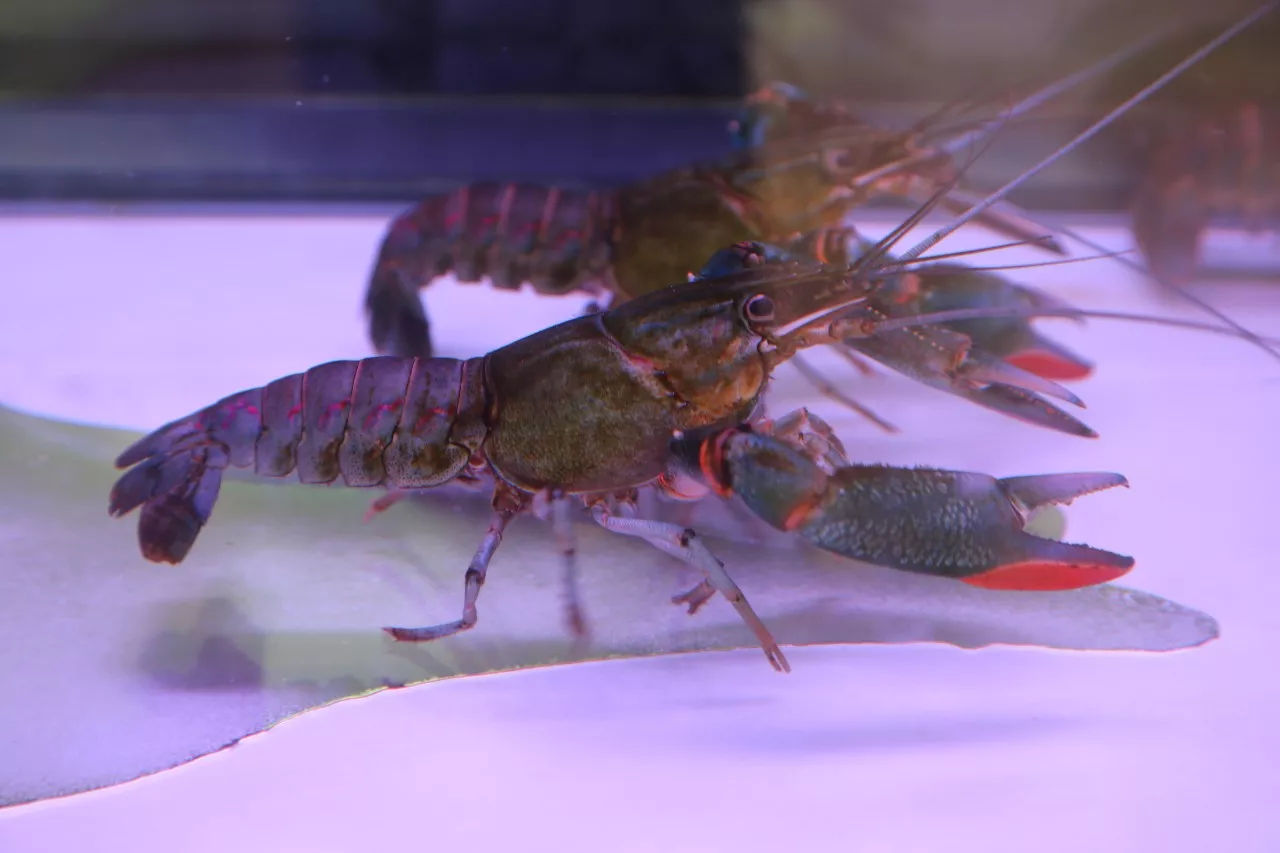
In order to determine the critical value of dissolved oxygen of lobster to water, we have made experiments in the laboratory with aquarium. The water depth of 40 cm × 60 cm aquarium is 25 cm. There is no floating substance that lobster can attach to the water. After the lobster is put into the water, the dissolved oxygen in the water is 0.67 mg / L when the death rate of lobster in aquarium is 73%.
Feeding habits of crayfish
Lobster has a variety of food habits. Various fresh aquatic plants, benthos, molluscs, large zooplankton, and the corpses of fish and shrimps and the same kind of corpses are the favorite food of lobster, and they are also fond of artificial feed. In the growing season, when there are a lot of phytoplankton on the water surface in the downwind of the pond, the lobster can observe the phenomenon that the lobster puts the mouthparts on the horizontal surface and uses two big claws to paddle the water to send the algae to the population, which indicates that the crayfish can even use the algae in the water.
Reproduction of crayfish
The mating season of lobster is generally from late April to July, and the peak mating season is in May. During mating, the female shrimp lies on the bottom of the water, and the male shrimp is on the top of the water to clamp the female's fore claw, and the walking feet hold the female shrimp and insert the connector into the female body. The mating time was 10-30 minutes. We first observed in the experiment and the market that the spawning shrimp was on May 28 and June 4. After August, a large number of female shrimp began to hold eggs, and after September, juveniles hatched.
After hatching, all the juveniles attached to the abdominal swimming feet of the mother and completed the growth and development of the larval stage under the protection of the mother. In the lobster culture area of wanglonggang in Dafeng City, three times of hole digging and sampling observation were carried out in September, November and December. The body length of the largest lobster larva has reached 1.0-1.1cm. It can be inferred that the growth, development and overwintering process of the juvenile lobster are attached to the abdomen of the mother after hatching in the early autumn of the first year, and then leave the mother in the spring of the next year. Crayfish this way of breeding offspring, to ensure a high survival rate of offspring.
Burrowing habits of crayfish
1. Depth and speed of excavation
The depth of lobster burrow is the key factor to determine the damage degree. According to our field survey of 35 cases of crayfish caves, the depth of most caves is 50-80 cm, accounting for about 70% of the surveyed caves. The depth of some caves is more than 1 m, and the longest cave is 2.1 M. Generally, lobster caves with horizontal strike are more than 1 meter deep, while caves with vertical depth downward are generally shallow. Lobster burrows very fast, especially in a new living environment. After one night's observation, we found that most of the new holes dug by lobsters were more than 30 cm deep in sandy soil.
2. Location of lobster caves
The location of lobster's burrow is usually located at the horizontal plane, but this choice is often higher or lower than the water level due to the change of water level. Therefore, the most lobster holes are found at 20 cm above and below the water surface. However, the location of lobster burrow is not very strict. In our experimental base, there are lobster caves on the water bank, the water slope, and the bottom of the pool in the shallow water area.
3. Influence of living environment on lobster burrowing
The results show that the effect of sediment conditions on lobster burrowing is obvious. In sandy soil with lack of organic matter in bottom material, lobster drilling is more common, while hard soil drilling is less. When the water quality is more fertile, the bottom silt is more and the organic matter is rich, the lobster caves are obviously reduced. However, no matter what kind of living environment, the number of lobster burrowing in the breeding season has increased significantly.